

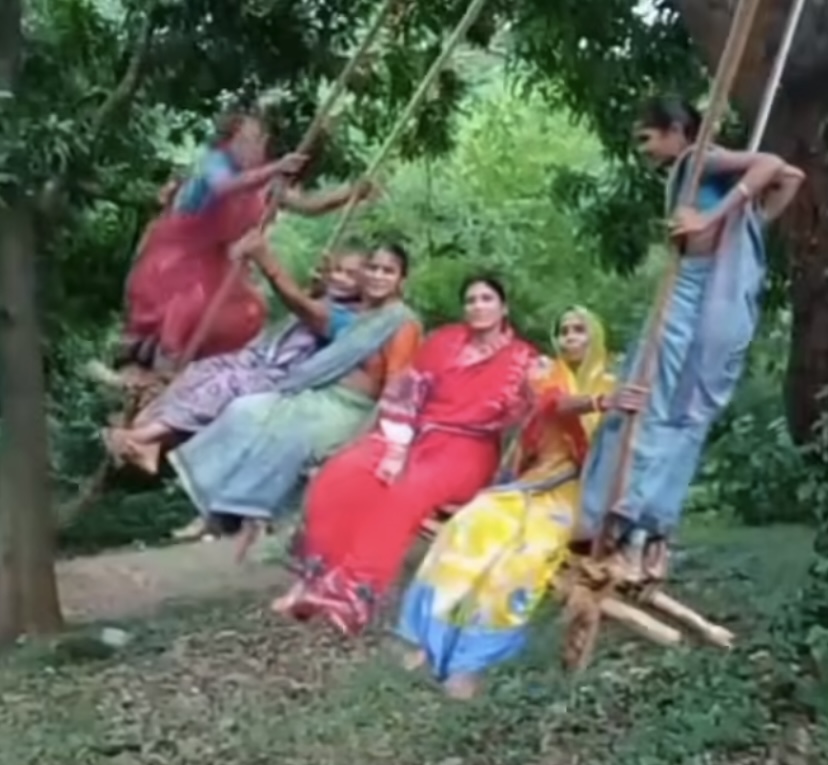
Kajri: Monsoon Melodies of Love, Longing, and Life
Close your eyes and imagine the monsoon – not just the rain, but the relief after scorching summers, the sudden burst of greenery, the dramatic thunder, and the earthy scent of wet lanes. This unique atmosphere finds its perfect voice in Kajri, a folk genre primarily from Uttar Pradesh-Bihar , India and Madhesh (plain land Geography) of Nepal . We can find multiple kajri songs in languages like Bhojpuri , Awadhi and Maithali Often called a “Sawan geet” (monsoon song), Kajri is a vibrant collection of melodies that capture the very soul of the rainy season, blending its pensive melancholy with heartfelt human emotions. Let’s know explore the richness of the genre together. The Heartbeat of Monsoon: What is Kajri? At its core, Kajri is deeply connected to the feelings of women, especially their yearning to return to their maternal homes (naihar) and reunite with their families. It’s a common theme for a woman to await her brother (Biran) who, according to tradition, will come to escort her home during the auspicious month of Shrawan (monsoon season). The songs are also rich with agricultural metaphors, like the planting of “dhan” (rice grains) in the month of Ashar, grounding the music in the life of the land. Musically, Kajri has a distinctive style. You’ll often hear “Teka” at the end of every line, and “Re Hari” is frequently used as an ending rhyming tool. Many songs begin with the evocative phrase “Are Rama.” A Tapestry of Themes: From Divine Tales to Domestic Dramas Kajri’s lyrical canvas is incredibly broad, weaving together elements of devotion, personal longing, and social commentary: Divine Narratives: Songs about Lord Shiva and Ganga, Lord Krishna playfully transforming into a gopi, or the tender interaction between Lord Rama, Lakshman, and Shabari. They also depict Sita’s journey with Rama, conversations about comfort, suffering, and marriage. Love and Longing (Viraha): This is a prominent theme, portraying the intense longing of a woman for her beloved who is in a distant land. When monsoon clouds gather, this separation becomes almost unbearable. She cries out, sometimes even at the feet of goddesses, and these emotional outbursts take the form of Kajri. It’s truly an outpouring of a woman overwhelmed by the desire to meet her husband. Runjhun kholida kewadiya hum bidesw jabaii na . Lawuu tuhu piya bideshwa jaba na , Humre baba ka dolaida hum nahiharw jabaii na . (This song translates as “Oh my beloved unlock the door, I have to go abroad, Oh my dear husband, if you leave I will go to my mother’s home too.”) Everyday Life and Relationships: Kajri doesn’t shy away from depicting the complexities of human relationships, including themes of extramarital affairs and polygamy. For instance, one song laments: “Rajau kawan mares tori matiya, rakhla teen sawatiya na.” “Behayie magaii pudu-kachaudi, udhari pakwan” “Aab toh magaii paturiya na uhtoh donwan maii malai” (Oh my beloved, why did you lose your mind and keep three wives? The married one asked for puri and kachaudi, the one kept outside asks for a list of cuisines, now the ‘slut’ (concubine) asks for desserts on plates.) Ornaments and Adornment: Ornaments hold deep significance in a woman’s life. Kajri reflects this, as seen in a song about a nose ornament: “Hari hari datuwan tori gayali kawan bagiya re hari.” “Aree rama datuwan chataki nathiya tutali re hari” (Which brush did you use from the forest? Oh Rama, the natural brush broke my nose ornament.) And another highlighting its importance: “Ak the jhulani par laagal dil hamar da, maati sab singaar ba na.” “Jab hum bahare kahunjaati, hamari naakdekhkar khali” “Sakhiya kahati ka tor balam milalai gawar na” (My heart is attached to that nose ornament, all other ornaments are like soil (valueless) to me. I don’t go outside because my nose is without ornaments. All my friends tease me that my beloved is dumb.) Post-Marriage Ceremonies (Gawana): The “Gawana” ceremony (a post-marriage ritual where the bride formally goes to her husband’s home) is also a theme. A song might depict the emotion of a girl who has fallen in love with a buffalo-herder who serves her delicious food, complaining about what her “heartless husband” will serve in contrast: “Gahiri preet lagi aahira se hum gawana nahi jaab” “Aahira kheyawaii pudi mithai, tuh ka khiyaibau dagabaj” (I have fallen deeply in love with the buffalo-herder, so I will not go for Gawana. The buffalo-herder feeds me puri and sweets, what will you feed me, betrayer?) Romantic Gestures: The preparation of Mehndi (henna tattoo), an important ritual for women, also features as a symbol of love and romance between a couple: “Humaii mehandi leaaida motijheel sa laya ke saikeel sa na” “Mehandi chowk sa liaawai chotki nanadi sa peshaya,” “Aapne haathwa sa laagaya da kaatkeel sa, jai ka saaikel sa na” (Bring me mehndi from Motijheel by cycle. My younger sister-in-law should grind the mehndi from the market. Apply it on my hand yourself, by cycle.) Monsoon’s Embrace: Kajri, as a “Sawan geet,” is abundant with portrayals of thunderstorms, lush greenery, the sound of thunder, the eerie quiet of wet lanes, and the shadowy atmosphere of the rainy season. After sizzling hot summers, the black monsoon clouds bring immense relief and joy. “Barsan lagi badariya, sawan ki” “More dani chunariya bheejh gaii” “Kare badara, kare koyaliya, kare mora shyaam” “Budaan barsa akhiya haamar re, mora dhaani chunariya bheej gaaii” “Mai birhiniya, suni sajariya, bani re joganaiya” “Piya nahi aaya suni sajariya” “Tera kaaran bhaii re badnaam re, morii dhani chunariya bheej gaiii” (The clouds have started to rain, my shawl is getting wet. Black clouds, blacker the koel, black my beloved Shyam. My eyes rain like raindrops, my shawl got wet. Under the pain of separation, all alone, I have become like a saint. People make bad gossip about me, my shawl got wet.) Warnings and Advice: Some songs offer advice or express concerns, like a sister-in-law being warned about going out alone during the monsoon: “Kaise khela jaaibu
Kajri: Monsoon Melodies of Love, Longing, and Life Read More »


